 English
  中文简体
中文简体  русский


Новости отрасли
ГЛАВНАЯ / Новости / Новости отрасли / Does an OEM Replacement Clutch Kit Need Every Original Component
Does an OEM Replacement Clutch Kit Need Every Original Component
Clutch replacement often raises a practical question: should an oem replacement clutch kit contain every component found around the original clutch assembly? The answer depends on the vehicle application, release system, flywheel condition, and service design. GUHL approaches clutch kits as matched product systems, with each component included according to its mechanical role and application requirements.
Core Components Build the Working Clutch
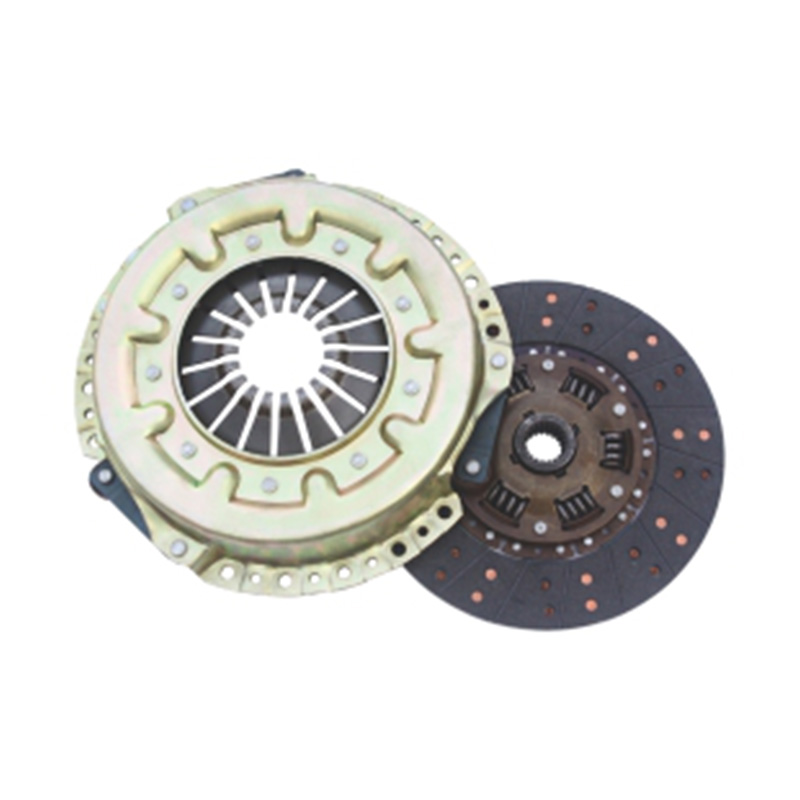
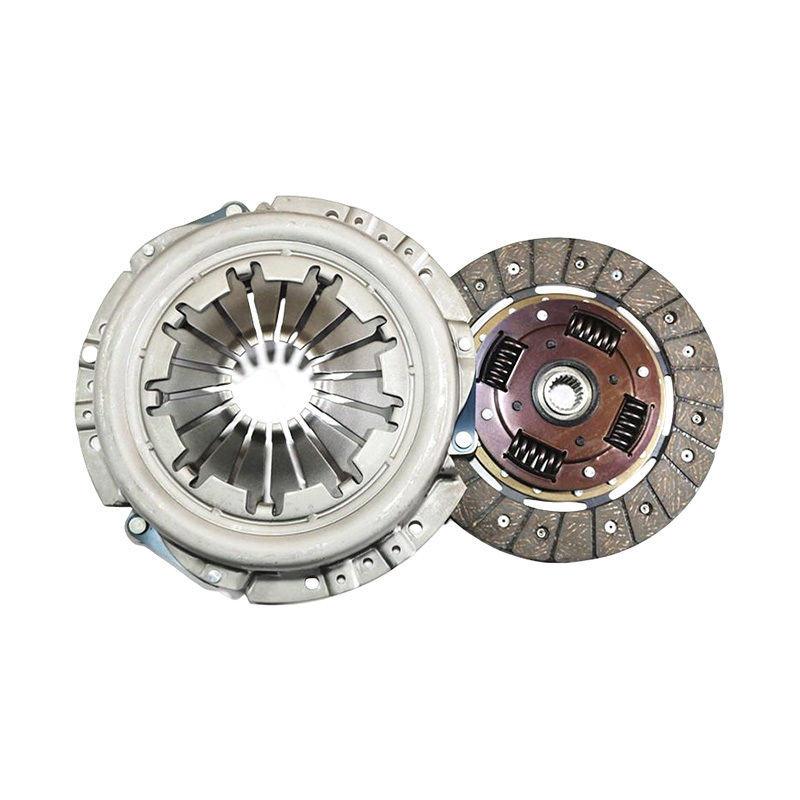
Three components normally form the central working group: clutch disc, pressure plate, and release mechanism. Their dimensions and operating characteristics need to correspond with each other.
- Clutch disc: Transfers engine torque through the friction surfaces and transmission hub.
- Pressure plate: Applies clamping force to keep the disc engaged with the flywheel.
- Release bearing: Transfers release-system movement to the pressure plate diaphragm spring.
- Pilot bearing or bushing: Supports the transmission input shaft on applications that use this component.
Many replacement kits combine several of these parts. Public product specifications show that kit contents can vary by application, so the phrase “complete clutch kit” does not guarantee an identical component list across every vehicle.
Why the Flywheel Is Often a Separate Decision
The flywheel works directly with the clutch disc, yet it does not necessarily need to be replaced with every clutch kit. Its condition, surface profile, thickness, and application determine the service requirement.
GUHL treats the flywheel as a separate fitment consideration rather than automatically adding it to every oem replacement clutch kit . Some replacement kits are supplied without a flywheel, while other applications use a kit designed around a new flywheel. Current aftermarket product listings demonstrate both configurations.
Flywheel Details Worth Checking
- Friction surface condition
- Working surface diameter
- Flywheel thickness and step height
- Mounting pattern
- Single-mass or dual-mass construction
Proper surface preparation also matters. Some clutch suppliers specify resurfacing or replacement of the flywheel as part of their installation requirements, showing that clutch performance depends on the interface between the new assembly and the existing flywheel.
Release Bearings Need Application-Specific Matching
Release hardware cannot simply be added based on appearance. Push-type and pull-type clutch systems may require different release arrangements, while some vehicles use hydraulic release bearings rather than a conventional external release bearing.
- Bearing interface: Must correspond with the pressure plate diaphragm spring.
- Release travel: Needs to match the clutch cover's operating range.
- Mounting method: Depends on the vehicle's release mechanism.
- Hydraulic configuration: Some applications require an integrated hydraulic release bearing.
Changing the pressure plate without considering release geometry can create engagement or disengagement problems. GUHL therefore considers the clutch disc, cover, and release arrangement as related components rather than independent replacement items.
Does the Pilot Bearing Always Belong in the Kit?
Not necessarily. Pilot bearings or bushings are required only on applications using that type of transmission input-shaft support. Some kits include them as application-specific components, while others do not.
This distinction is important for distributors purchasing an oem replacement clutch kit . Kit completeness should be judged against the vehicle's original configuration rather than by counting the number of parts inside the box.
Matching Matters More Than Component Count
Adding extra components does not automatically create a better clutch kit. Compatibility depends on dimensions and operating relationships.
- Disc diameter: Must correspond with the flywheel and pressure plate.
- Spline specification: Hub dimensions must match the transmission input shaft.
- Clamp load: Pressure plate force needs to suit the engine's torque output.
- Release geometry: Bearing movement must correspond with the clutch cover.
GUHL develops replacement clutch assemblies around these relationships. Product configuration can therefore vary according to engine, transmission, flywheel design, and release mechanism.
What Should an OEM Replacement Kit Really Replace?
The purpose of an oem replacement clutch kit is not to reproduce every surrounding component automatically. Its role is to provide the clutch components required for a specific application and make those components work together as a compatible assembly.
GUHL focuses on this application-based approach. Clutch discs, pressure plates, release components, and related parts can be configured according to vehicle requirements. Such a product strategy gives distributors and repair professionals a clearer way to evaluate kit contents: check the required components, verify the dimensions, and confirm that the complete assembly corresponds with the original drivetrain configuration.
ПРЕДЫДУЩИЙ:Предыдущей статьи нет
СЛЕДУЮЩИЙ:What Makes One Automotive Clutch Fit Another Engine Variant
СЛЕДУЮЩИЙ:What Makes One Automotive Clutch Fit Another Engine Variant
Заинтересованы в сотрудничестве или у вас есть вопросы?
Сопутствующие товары
свяжитесь с нами
найдите наш офис
Мы стремимся предоставлять профессиональные решения для всех типов крышек сцепления и дисков сцепления.
-
 +86-578-8997966
 -
 +86-18957070075
 -
 +86-15258722555/+86-18957070075
 -
 info@doanaut.com
 -
 No.201,Changxing Third Road, Xiping Street, Songyang, Lishui, Zhejiang, China.
Мобильный

Распродажа1-WeChat

Распродажа-WeChat
Авторские права © 2026 Zhejiang Kaiyue Auto Parts Manufacturing Co.,Ltd. Все права защищены.
